
Posture training is an often overlooked benefit to zine printing
You’re still here? Great! In the previous episode I covered publishing and printing the zine up to having them delivered. As it turns out, making a zine and convincing people to buy one are two very different challenges. Now I’ll share my thoughts on how I got it into people’s hands.
Pricing and Selling: You are here
Copies
One thing I didn’t mention before was why I printed 100 copies. The more you print, the cheaper each copy is but equally the more you will spend in total, therefore adding more risk if you can’t shift them. Mo copies mo problems.
With my Carnival zine, I printed 100, so I had something to benchmark against. On one hand, I expected to sell less to photographers as the subject is a bit more divisive (although I know one Tottenham fan that purchased it, no names mentioned but thank you!). I also didn’t pursue a listing at The Photographers’ Gallery (as it’s for charity, I think it would confuse things a bit) and I think in general, you’ll get more support for your first zine. On the other hand, this should appeal more to Arsenal fans, as opposed to just photography fans, and the Arsenal fan base is a lot larger than London street photography.
So in the end I didn’t really know. I was initially thinking of printing 50 but went with 100 just in case demand from Arsenal fans came through. Ultimately, it was a case of weighing up the financial risk against the potential demand.
Pricing
This is a bit of an awkward subject as speaking about money is a bit of a taboo. The way to look at this is to work out the price of the zine and the postage and packaging separately.
I’ll state the obvious. The higher the price, the more you make on each copy, but potentially the fewer you’ll sell. Where is the sweet spot? No idea so benchmarking against the price others are selling at is key. Going below might look like you’re saying your work is of a lesser quality than average and going above might look a bit egotistical.
I would say the average price range for zines right now is £10-£12. I sold Carnival, an A5 zine, for £10. For Champions, a larger and more costly zine, I increased the price to £12. It cost roughly £2 more to make* so the price set itself really. I did ponder keeping it at £10 as it is one of those mental price points that crossing has a disproportionate impact on sales, but I stuck with £12 and I have no idea how much of an impact it has made.
*if you don’t count paying double as the first batch was badly printed
Postage & Packaging
This is a little more straightforward. Here I aimed at breaking even on P&P costs. I bought some A4 envelopes from Amazon with a cardboard back to keep the zines flat and some plastic slips for people collecting in person.
In the UK the best way to post the zines is with the Royal Mail. With Carnival, I gave the option for first or second class postage, but no one went first class, so with Champions I just went for second class. I also tried a list of countries to get a price and while they all varied, the European countries were quite closely clustered together and so were the “rest of world” ones.
Taking an average point on those three clusters, and adding the envelope costs divided by the number of copies, I had my P&P cost prices. Add to this the price of the zine (£12), I now had 100 copies and a price. Sounds simple, but I did come across two issues:
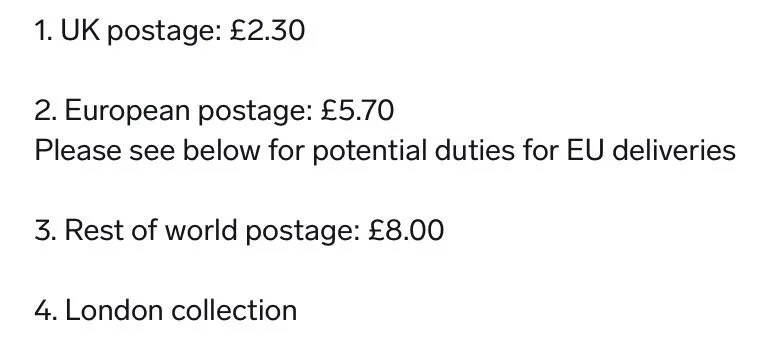
The postage options from my Big Cartel page
I didn’t read the Royal Mail website properly. If you print the stamps yourself, you can get a slightly lower price. This is what I incorrectly set my pricing against but I actually take them all in to the post office to send so the cost was a bit higher. I think it ate £12 of the profits. If you want to save some time, just add about 30p to each of my options above.
Make sure you keep the receipts too! I had one person in the UK having to pay for no postage affixed to the envelope, when I saw them add it in the post office. I reimbursed him £5 and will chase up a refund from the Royal Mail, so it was lucky that I had kept the receipt (I don’t always).
Now the pricing is all set, it’s time to sell!
Selling
There are lots of places to list a zine online. I know some people sell it via their website / Shopify, perhaps other options could be eBay or Etsy (I never looked into this) but the website I am using to sell it is Big Cartel.
Big Cartel is free to list one product at a time and with one image, which is all I needed. Additional photos or additional products require a subscription. Setting it up is very straightforward. There is a bit of time investment needed to set up the payment options, which are Stripe & PayPal, although Stripe is all you need to enable all card type transactions.
You can see my listing here if you want to see an example of a listing.
Publicity
So now I had a zine online for sale but how would people know about it? There are lots of ways to publicise it, and I am no expert in this field, but I’ll take you through my thoughts.
Instagram. This is the obvious place to start. I made a few posts about it as well as some stories. It can (and did) feel a bit cringy but it is necessary. You’ll have to do a few posts and stories spread out a bit to maximise the chance of people actually seeing it. I have 3680 followers, and my posts on average get between 900-1500 views. I didn’t look into paying for a promotion, which could be another option, but getting people to share it on their stories, or even better, as a collaborative post (if it makes sense to do it), significantly boosts this number. The actual post about the zine got me 23,500 views as it was shared by some friends and some Arsenal fans.
Website/Blog/Newsletter. I have these (you’re reading it right now!) so it is only natural to mention and talk about the zine here. While the views are much lower than Instagram (my zine blog post has 49 views on Substack and no idea on my website, probably a similar number), people spend longer and read more, so it’s the best place to share some background to the zine. I know for one I’m more likely to purchase a zine if I’ve followed the story of the process and I guess it will be the same with others.
Shout outs / Mentions. I mentioned earlier that the biggest potential market was Arsenal fans. My plan was to get a mention on social media from one of the podcasters I’ve been diligently listening to on a weekly basis for years, so I tweeted to each but no luck. I guess I could have tried again but I didn’t want to pester. With Carnival, I sent a few copies out to people, who mentioned it on their platforms (for example Ed Thompson) but I didn’t do the same this time around.
Joint launch. With Carnival, I launched it at the same time as Josh’s ‘An Excuse to Linger’ (sold out but his new zine ‘Like Nowhere’ is available). With this, we shared each other’s stories and had a joint in-person launch event, so we could piggyback on each other’s audiences. With Champions, I did the same but this time with Carolina and her ‘Oral Fixation’ zine. Definitely a good strategy if you know someone launching at a similar time.
I found the vast majority of my sales came from the initial couple of weeks to people I know or have directly corresponded with, so as important as those points above are, I suspect personal connections are the strongest sales driver.
The boost in views on a post didn’t really materialise into many sales, even though I don’t have a way of tracking exactly how many came from what source. I guess the lesson is that getting your work in front of people is one thing, but getting them to part with their money is quite another.
Hopefully some food for thought there, and I’m sure there are other, better ideas. Please share any thoughts you have on this topic in the comments!
Charity
As I’ve mentioned, the Champions zine is a small part of my broader Arsenal photography project. My dad passed away during the 12 days covered by the zine, so I wanted to use it to raise some money for charity.
All profits will go to Headcase, a charity supporting research into glioblastoma, the brain cancer that took my dad. I’ll calculate the profits by deducting printing and postage and packaging costs from the revenue and donate the remainder through my JustGiving page .
Tax
A bit of a boring topic but one to bear in mind. I don’t like creating extra admin for myself, so I’m keen to avoid having to do a tax return. In the UK, you can earn up to £1,000 from all trading income per tax year (revenue not profit), before you need to complete a Self Assessment tax return, subject to individual circumstances. This will include any P&P that you take in your zine sales. There is a proposal to increase the Self Assessment reporting threshold from £1,000 to £3,000 next tax year (6th April 2027), which would lead to considerably more room for manoeuvre.
100 zines at £12, plus an average of £3 for P&P would take the total revenue to £1,500 if they all sold. I’m under the £1,000 cap right now, so to avoid going over, when I get close I’ll flag the zine as sold out. As I don’t have any other trading income this tax year, that works out at approximately 66 zine sales, so I’d be sat on quite a few. I’m contemplating doing this pretty soon (so get in there quick! ) and then bringing it back out in the next tax year.
It’s a wrap
So my second zine is complete and on sale. It was a smoother process than Carnival and if I had to summarise my learnings this time round, it would be:
Input from other photographers is still critical
Affinity is easy to use and superior to using Mixam’s online software
Print.work is superior to Mixam (I’m unlikely to return to Mixam)
I should probably be a bit more pushy with trying to get in contact with some Arsenal podcasters
I need to read the postage costs more thoroughly
Just like the first zine, I found the process of creating Champions very valuable. It really makes you think more about the end product of your photography. It also reinforces the importance of sequencing and how some weaker images grow in importance to connect the dots. There is also the egotistical side of things, having people exchange their hard-earned Ps for your zine is validating. The additional income is welcome too, or in the case of Champions, the opportunity to raise some money for charity, even if we aren't talking about big numbers here. My only reservation is that it does feel a bit like a cottage industry, with photographers largely selling zines to other photographers. Not necessarily a bad thing, but perhaps that's a topic for another time.
With the self-imposed “sold out” coming, when I relaunch in April, I’ll send some copies out to some people as I did with Carnival to see if it can get a mention, or at least some feedback, which is always valuable.
So that's it. From 1,132 photographs to 31 images in a printed zine, and hopefully into 100 people's hands. It's been a lot of work, a few mistakes and a fair amount of money, but I'd absolutely do it again.
Hopefully this mini-series has been useful to anyone considering making their own zine. If you've got any questions, leave them in the comments and I'll do my best to answer them. Next time, something completely different!
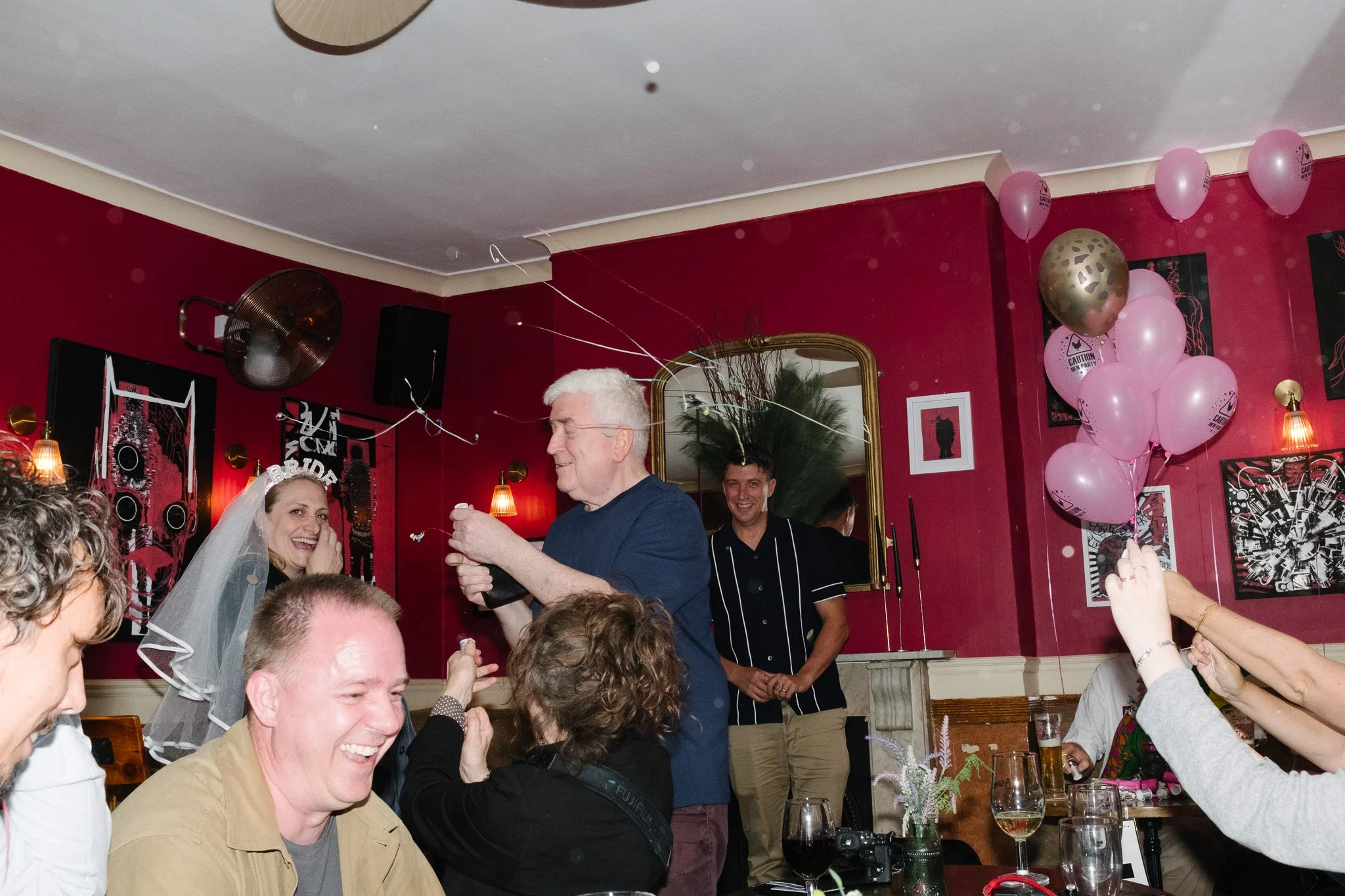


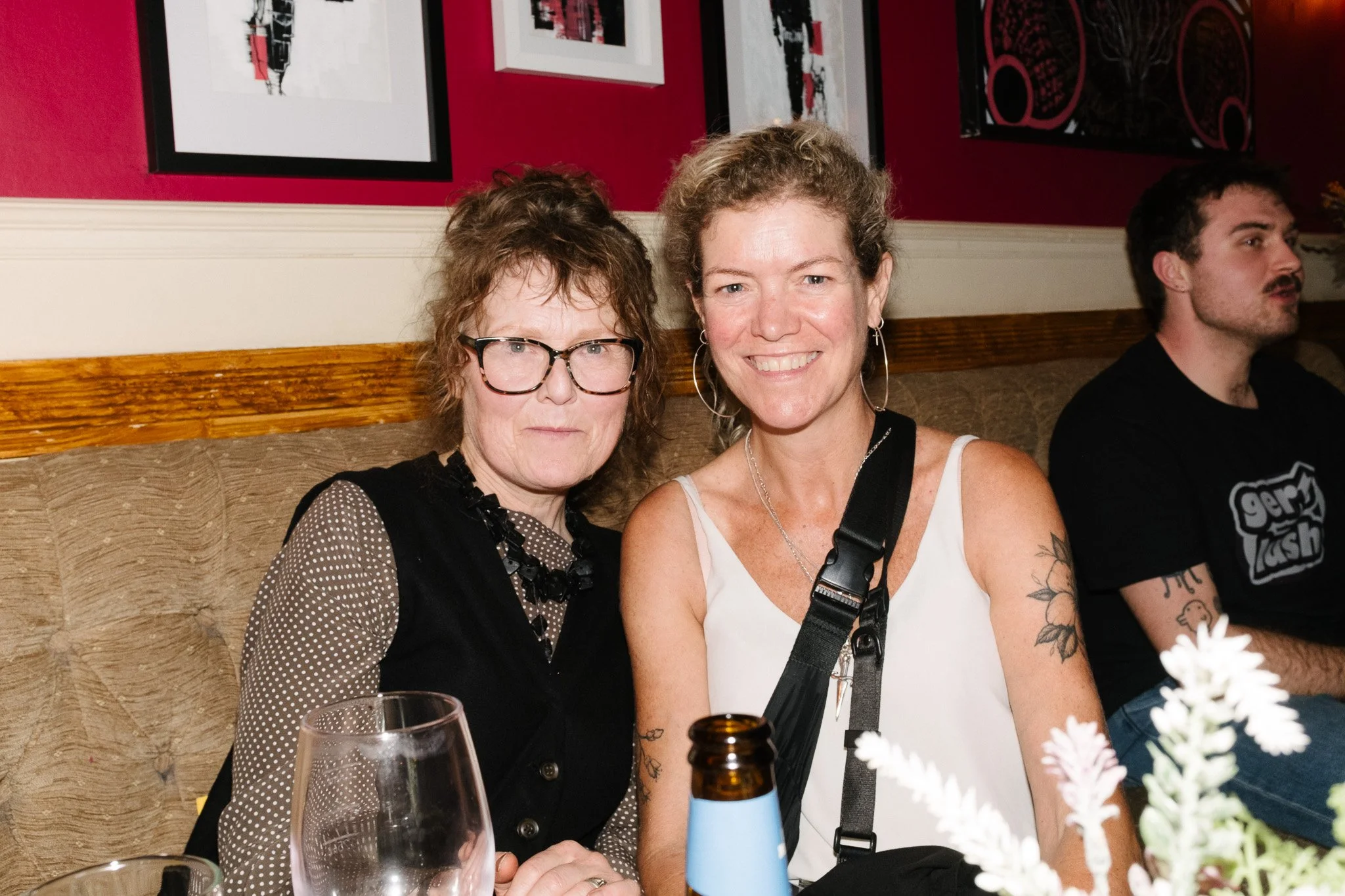

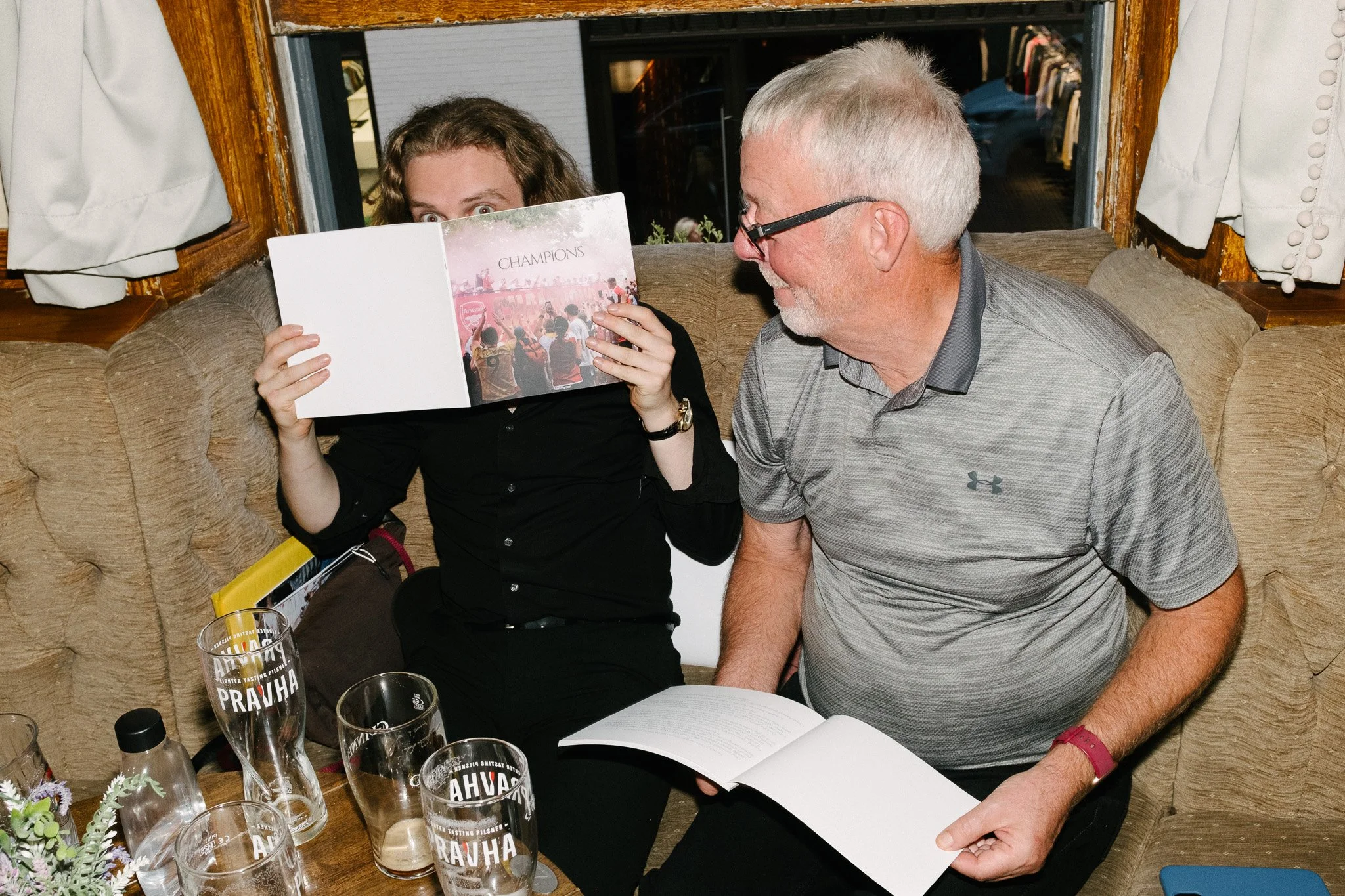
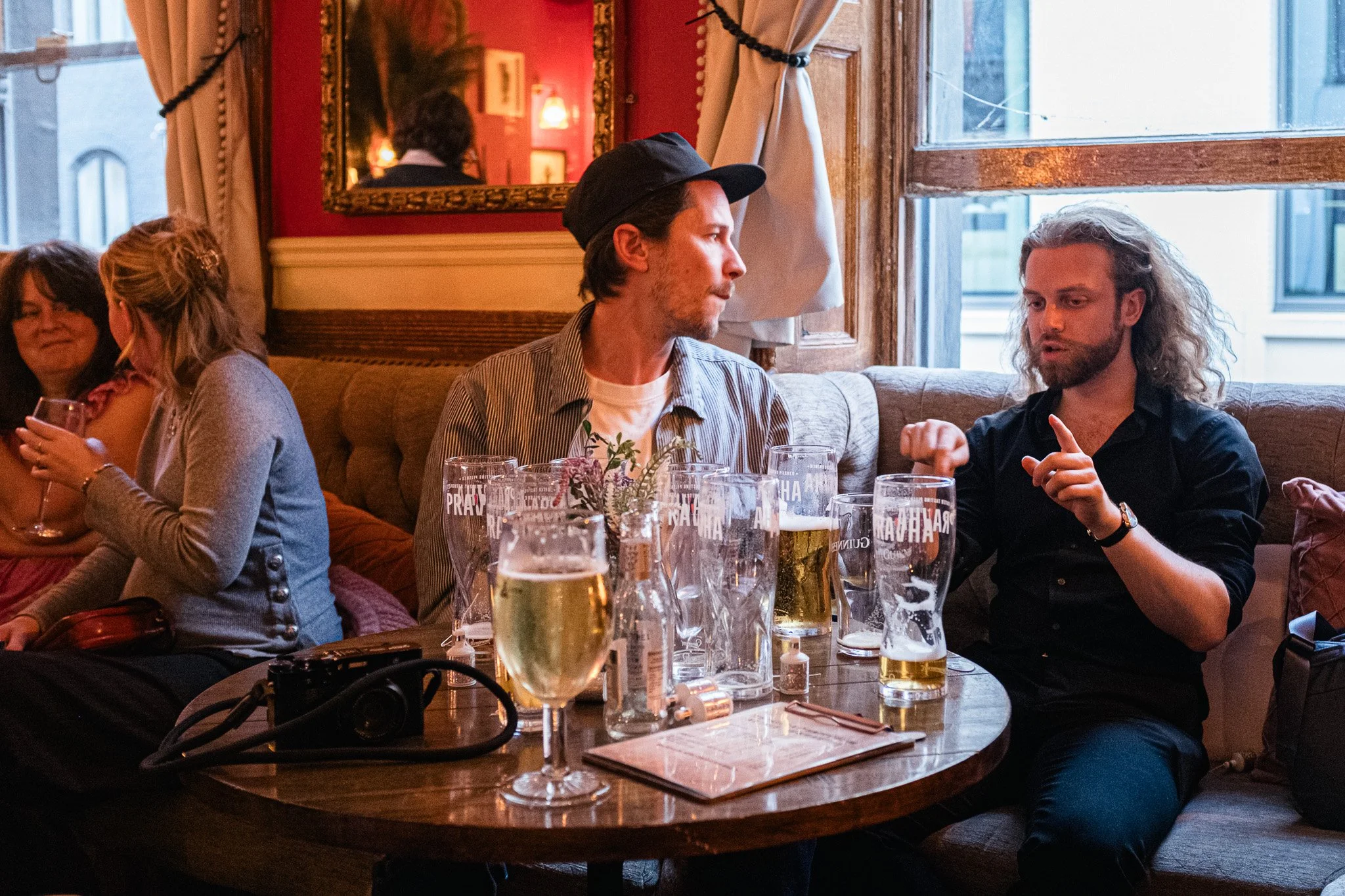
A few images from the zine launch event